
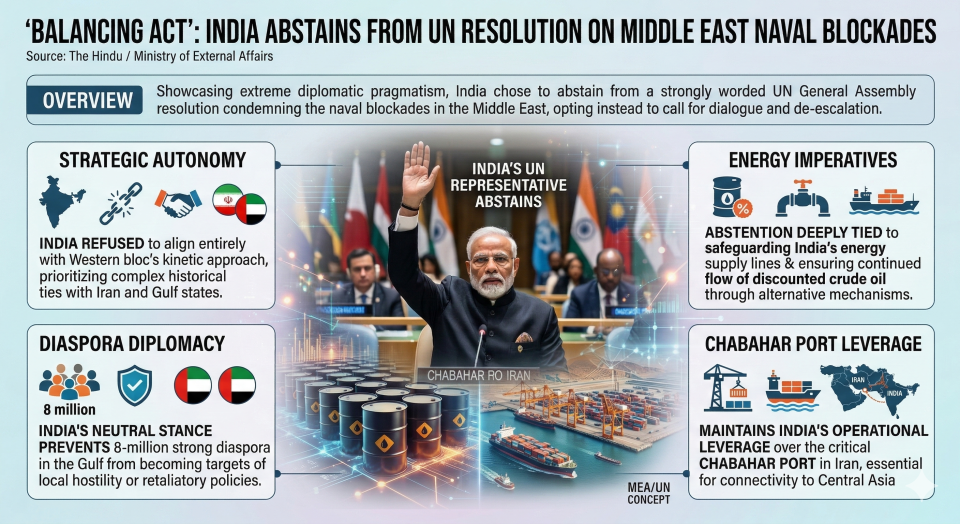
- Overview: Showcasing extreme diplomatic pragmatism, India chose to abstain from a strongly worded UN General Assembly resolution condemning the naval blockades in the Middle East, opting instead to call for dialogue and de-escalation.
- Key Points:
- Strategic Autonomy: India refused to align entirely with the Western bloc’s kinetic approach, prioritizing its complex historical ties with Iran and Gulf states.
- Energy Imperatives: The abstention is deeply tied to safeguarding India’s energy supply lines and ensuring the continued flow of discounted crude oil through alternative mechanisms.
- Diaspora Diplomacy: India’s neutral stance prevents its 8-million strong diaspora in the Gulf from becoming targets of local hostility or retaliatory policies.
- Chabahar Port Leverage: Maintains India’s operational leverage over the critical Chabahar Port in Iran, essential for connectivity to Central Asia bypassing Pakistan.
Source Link: Permanent Mission of India to the UN
- Q6. The ‘Chabahar Port’, which holds immense strategic importance for India’s foreign policy, is located in which body of water?
- A) Red Sea
- B) Persian Gulf
- C) Gulf of Oman
- D) Caspian Sea
