
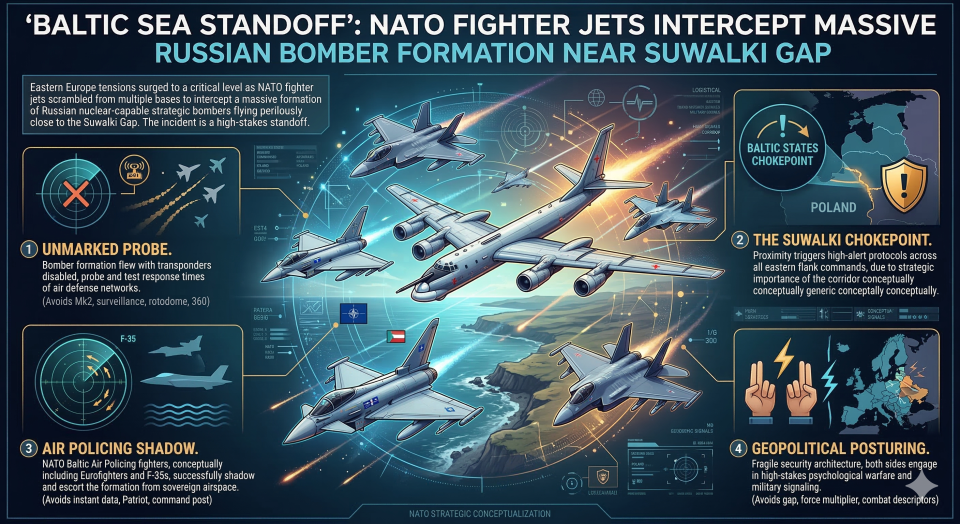
- Overview: Tensions in Eastern Europe surged to a critical level as NATO fighter jets scrambled from multiple bases to intercept a massive formation of Russian nuclear-capable strategic bombers flying perilously close to the Suwalki Gap.
- Key Points:
- Testing Defense Readiness: The bomber formation, which included Tu-95 “Bears” escorted by Su-35 fighters, flew with their transponders turned off—a classic tactic used to probe and test the response times of NATO’s air defense networks.
- The Suwalki Chokepoint: The proximity to the Suwalki Gap (the narrow land corridor connecting the Baltic states to Poland) triggered immediate high-alert protocols across all NATO eastern flank commands.
- Air Policing Mission: Eurofighter Typhoons and F-35s from the NATO Baltic Air Policing mission successfully shadowed and escorted the formation away from sovereign airspace without a kinetic engagement.
- Geopolitical Posturing: The incident serves as a stark reminder of the fragile security architecture in Europe, with both sides engaging in high-stakes psychological warfare and military signaling.
Source Link: NATO Allied Air Command Updates
- Q5. The ‘Suwalki Gap’, a highly strategic and vulnerable land corridor in Europe, connects which two NATO member countries?
- A) Germany and Poland
- B) Poland and Lithuania
- C) Latvia and Estonia
- D) Finland and Sweden
