
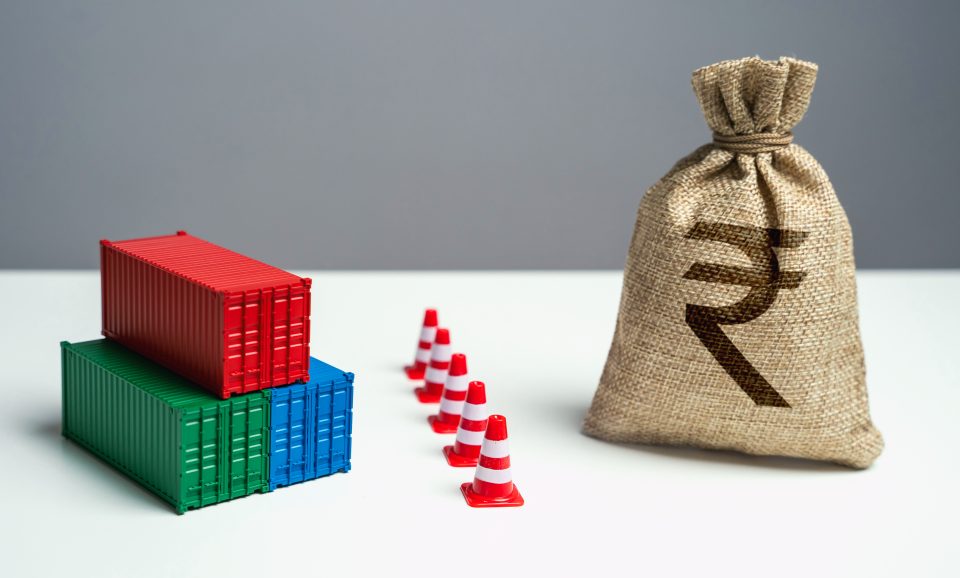
Revolutionizing international trade mechanics, the Reserve Bank of India (RBI) officially operationalized the cross-border settlement capability of the Digital Rupee (CBDC) in collaboration with the UAE Central Bank. This landmark initiative bypasses the SWIFT network, drastically reducing transaction costs and currency conversion times for bilateral trade.
Key Highlights & Strategic Significance
- De-Dollarization Push: By enabling direct Rupee-Dirham digital settlements, the initiative systematically reduces dependency on the US Dollar as a vehicle currency, shielding the Indian economy from imported inflation and forex volatility.
- Bypassing SWIFT: The interoperable CBDC framework operates on a distributed ledger technology (DLT) that completely circumvents the Western-dominated SWIFT messaging system, preventing geoeconomic weaponization of financial networks.
- Frictionless Remittances: Expatriate Indian workers in the Gulf can now remit funds instantly and at a fraction of the cost, as the digital ledger eliminates the need for multiple correspondent banking intermediaries.
- Smart Contracts in Trade: The cross-border e-Rupee utilizes programmable smart contracts, automatically executing payments to exporters only when digital customs waybills and bills of lading are verified on the blockchain.
- Macroeconomic Stability: This sovereign digital currency mechanism enhances the RBI’s ability to track cross-border money laundering (AML) and terror financing (CFT) in real-time, fortifying national financial security.
Source Link: https://rbi.org.in/Scripts/BS_PressReleaseDisplay.aspx?prid=57599
Q. With reference to the Central Bank Digital Currency (CBDC) or ‘e-Rupee’ in India, consider the following statements: 1. It is a sovereign currency issued by the RBI and appears as a liability on the central bank’s balance sheet.
2. It completely replaces the existing physical currency and the UPI payment system.
Which of the statements given above is/are correct? A) 1 only
B) 2 only
C) Both 1 and 2
D) Neither 1 nor 2
