
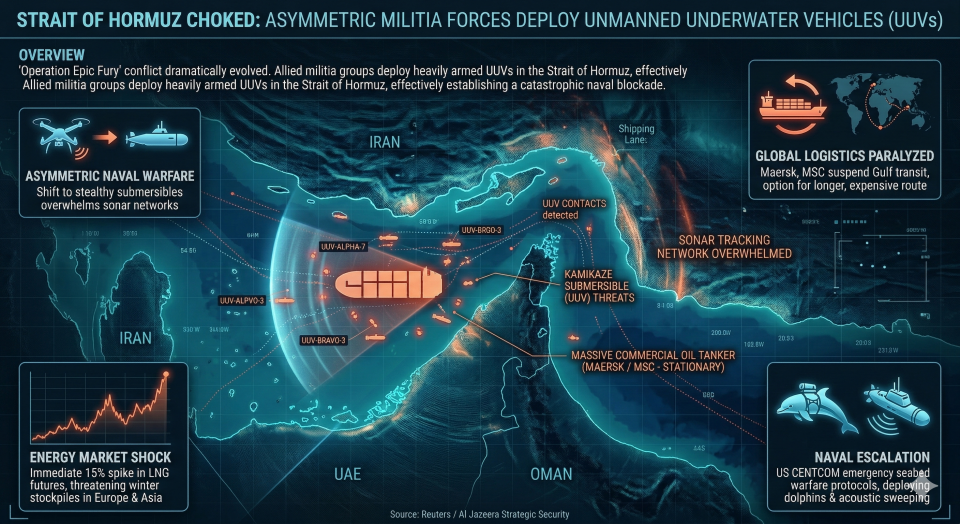
- Overview: The conflict surrounding “Operation Epic Fury” has evolved dramatically as allied militia groups deployed heavily armed Unmanned Underwater Vehicles (UUVs) in the Strait of Hormuz, effectively establishing a catastrophic naval blockade.
- Key Points:
- Asymmetric Naval Warfare: The shift from aerial drones to stealthy ‘kamikaze’ submersibles has overwhelmed traditional coalition sonar tracking networks.
- Global Logistics Paralyzed: Major shipping conglomerates (Maersk, MSC) have entirely suspended Gulf transit, opting for the longer, vastly more expensive route around the Cape of Good Hope.
- Energy Market Shock: The physical blockade has caused an immediate 15% spike in global LNG (Liquefied Natural Gas) futures, directly threatening European and Asian winter stockpiles.
- Naval Escalation: US Central Command (CENTCOM) has initiated emergency seabed warfare protocols, deploying mine-hunting dolphins and advanced acoustic sweeping tech.
Source Link: CENTCOM Maritime Threat Updates
- /Defense Practice Question:
- Q4. The ‘Cape of Good Hope’ route, increasingly utilized by global shipping to bypass Middle Eastern conflicts, requires vessels to navigate around the southern tip of which continent?
- A) South America
- B) Australia
- C) Africa
- D) Asia
