
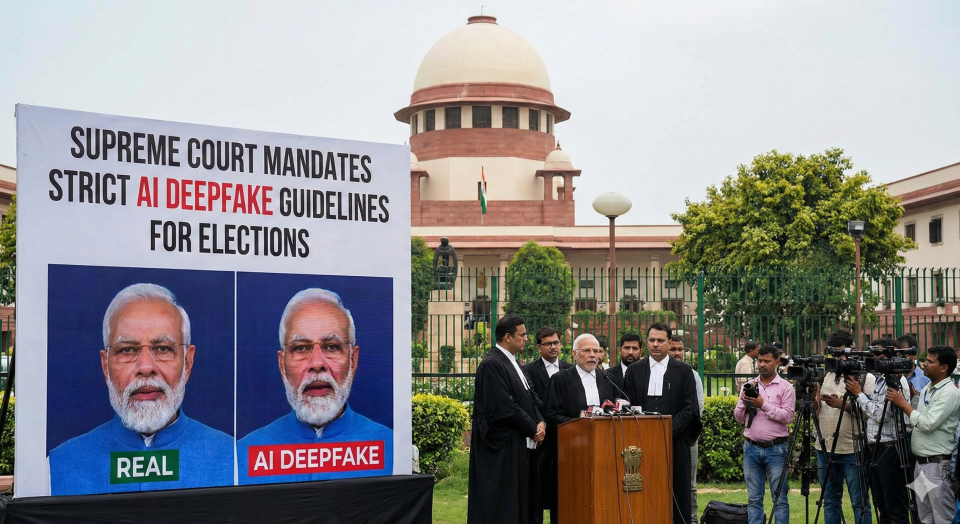
In a landmark constitutional judgment protecting electoral integrity, a Constitution Bench of the Supreme Court issued strict binding guidelines on the use of Generative AI and deepfakes during political campaigns. The Court ruled that non-consensual AI manipulation of candidates violates the fundamental right to free and fair elections, invoking Article 324.
Key Highlights & Strategic Significance
- Algorithmic Accountability: The Supreme Court invoked its extraordinary powers under Article 142, creating a temporary legal framework until Parliament passes a standalone Artificial Intelligence Regulation Act.
- Mandatory Watermarking: The guidelines compel all political parties and social media intermediaries to visibly and cryptographically watermark any AI-generated audio or video content, ensuring voters are immediately aware of synthetic media.
- 12-Hour Takedown Rule: Elevating the IT Rules, the Court mandated a strict 12-hour takedown window for major social media platforms (Significant Data Fiduciaries) upon receiving a verified complaint regarding a malicious deepfake from the Election Commission.
- Voter Autonomy Protected: The Bench ruled that malicious deepfakes distort the “informational parity” required for democratic choices, thereby violating the citizen’s fundamental Right to Information under Article 19(1)(a).
- ECI Empowered: The Election Commission of India (ECI) has been authorized to establish a dedicated ‘AI Cyber-Nodal Authority’ to proactively monitor digital campaigns and immediately freeze the digital assets of repeat offenders.
Source Link: https://www.livelaw.in/top-stories/supreme-court-guidelines-ai-deepfakes-elections-article-324
Q. The power of “Superintendence, direction, and control of elections” is vested in the Election Commission of India under which Article of the Constitution?
A) Article 320
B) Article 324
C) Article 326
D) Article 330
