
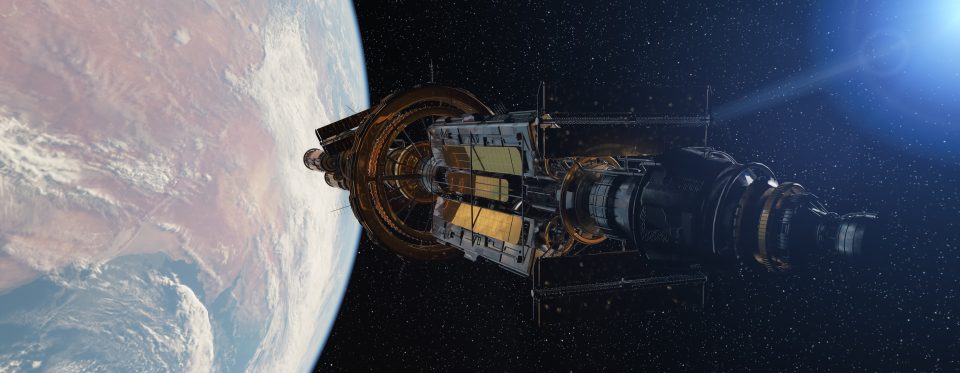
The Indian Space Research Organisation (ISRO) achieved a critical milestone by completing the final payload integration for the Gaganyaan ‘G1’ uncrewed orbital flight at the Satish Dhawan Space Centre. The mission will carry the advanced ‘Vyommitra’ humanoid robot to validate complex life-support and abort systems before the historic crewed launch scheduled for late 2026.
Key Highlights & Strategic Significance
- Human-Rated Launch Vehicle: The ‘G1’ mission utilizes the Human-Rated LVM3 (HLVM3), which has been rigorously modified with quadruply redundant avionics systems to ensure a zero-failure probability during ascent.
- Vyommitra’s Role: The half-humanoid ‘Vyommitra’ is equipped with biometric sensors to simulate exact human metabolic functions, continuously analyzing cabin pressure, thermal parameters, and radiation levels in Low Earth Orbit (LEO).
- ECLSS Validation: The primary objective is to flight-test the highly complex, indigenous Environmental Control and Life Support System (ECLSS), which regulates oxygen supply and scrubs lethal carbon dioxide from the capsule.
- Re-entry and Splashdown: The mission will rigorously test the ablative thermal protection system (TPS) during the fiery atmospheric re-entry, followed by a precise, parachute-assisted splashdown and recovery in the Bay of Bengal.
- Space Station Precursor: Perfecting these technologies is a non-negotiable prerequisite not just for human spaceflight, but for India’s ultimate vision of establishing the Bharatiya Antariksh Station (BAS) by 2035.
Source Link: https://www.isro.gov.in/Gaganyaan_G1_Integration_Complete.html
Q. With reference to ISRO’s Gaganyaan mission, the primary function of the ‘Crew Escape System (CES)’ is to:
A) Provide additional thrust to the rocket to reach geostationary orbit.
B) Ensure a safe, rapid extraction of the crew module away from the launch vehicle in the event of an anomaly during ascent.
C) Regulate the atmospheric pressure and oxygen levels inside the orbital module.
D) Deploy the solar panels once the spacecraft reaches Low Earth Orbit.
