
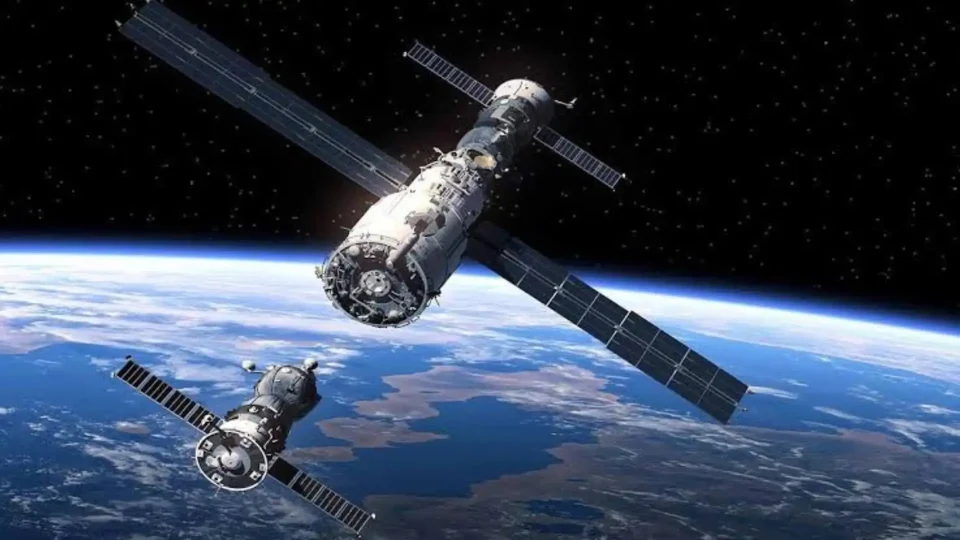
Moving closer to realizing the Bharatiya Antariksh Station (BAS), the Indian Space Research Organisation (ISRO) successfully executed the Space Docking Experiment (SPADEX). The mission demonstrated the highly complex capability of autonomously linking two separate satellites in Low Earth Orbit at speeds exceeding 27,000 km/h.
Key Points
- The Satellites: Involved two specially designed mini-satellites—the ‘Chaser’ and the ‘Target’—which were launched together and then separated before autonomous re-docking.
- Autonomous Rendezvous: Utilized indigenous computer vision, LiDAR, and robotic sensors to align and physically dock the spacecraft without any human intervention from ground control.
- Orbital Refueling: The technology forms the bedrock for future orbital servicing, allowing ISRO to refuel aging satellites, drastically extending their operational lifespans.
- Space Station Prerequisite: Perfecting docking technology is an absolute necessity for assembling the modules of India’s planned space station in orbit over the next decade.
- Data Transfer: Post-docking, the mission successfully demonstrated the transfer of electrical power and high-speed data between the two tethered satellites.
Source Link: ISRO Mission Updates: SPADEX Success
Q5. The primary objective of ISRO’s ‘SPADEX’ mission is to demonstrate technologies related to:
A) Deep space communication with the Martian surface.
B) Autonomous rendezvous and docking of two spacecraft in orbit.
C) Capturing and deflecting Near-Earth Asteroids.
D) Re-entry and recovery of reusable launch vehicles.
