
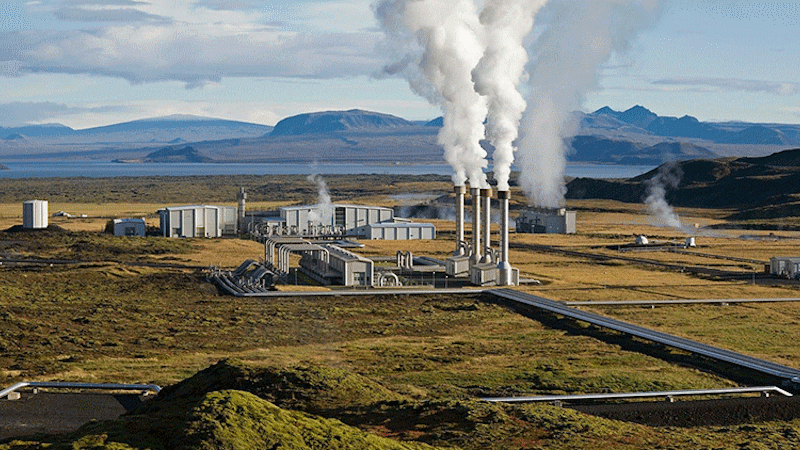
In a landmark achievement for India’s clean energy transition, the Oil and Natural Gas Corporation (ONGC) successfully operationalized the nation’s first commercial Geothermal Energy plant in the Puga Valley of Eastern Ladakh. The plant taps directly into the earth’s natural volcanic heat, providing 24/7 renewable baseload power.
Key Points
- The Geography: Puga Valley, located at an altitude of over 14,000 feet, lies on a major tectonic fault line, resulting in high subterranean temperatures and natural hot springs.
- Baseload Advantage: Unlike solar or wind energy, which are intermittent, geothermal energy provides continuous, uninterrupted power regardless of weather conditions or time of day.
- Winter Heating: The byproduct thermal energy is being directly utilized for space heating in extreme winters, crucially supporting Indian Army border outposts and local nomad communities.
- Zero Emissions: The closed-loop binary cycle power plant ensures that zero greenhouse gases are released into the fragile Himalayan atmosphere.
- Scalability: Starting as a 1 MW pilot, the project’s success has paved the way for scaling up to a 100 MW facility, pushing Ladakh closer to its ‘Carbon Neutral’ UT target.
Source Link: MNRE Updates: Puga Valley Geothermal Plant
Q4. Puga Valley, recently in the news for hosting India’s first commercial geothermal power project, is located in which of the following regions?
A) Spiti Valley, Himachal Pradesh
B) Eastern Ladakh
C) Tawang, Arunachal Pradesh
D) Chamoli, Uttarakhand
