
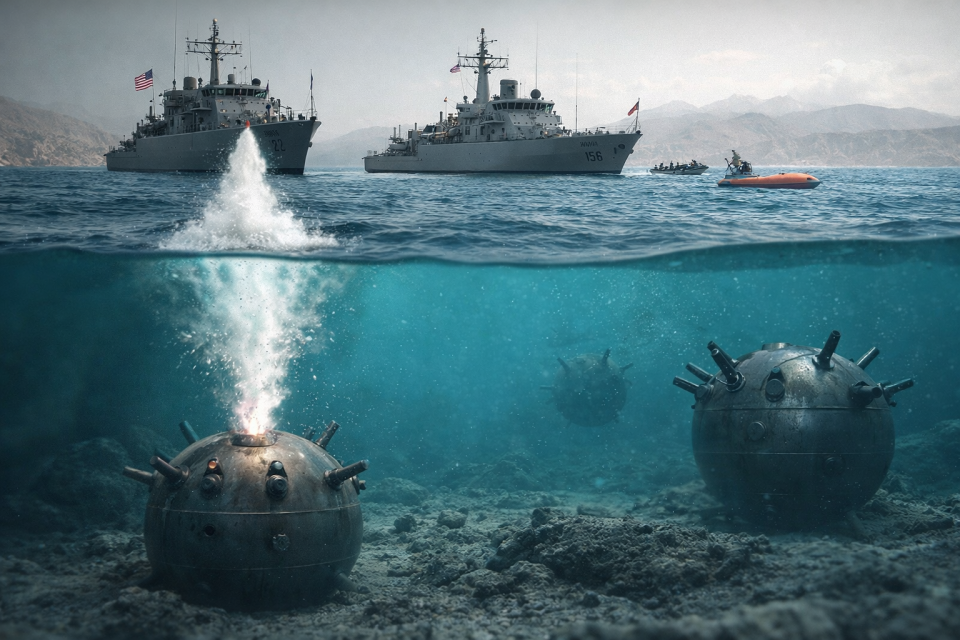
- Overview: The Middle East conflict has spiraled into a global logistical nightmare. Proxy militia groups have seeded the Strait of Hormuz with advanced, acoustic “smart” sea mines, effectively shutting down the flow of 20% of the world’s crude oil.
- Key Points:
- Asymmetric Denial: Unlike traditional floating mines, these smart mines lie dormant on the seabed. They use acoustic signatures to distinguish between a small fishing boat and a massive oil tanker, launching upward only when a high-value target passes overhead.
- Coalition Response: A multinational naval coalition has deployed specialized mine-countermeasure (MCM) vessels and autonomous underwater drones to slowly and dangerously clear the shipping lanes.
- Economic Shockwave: Global insurance premiums for maritime transit have hit record highs. Mega-carriers are being forced to reroute entire fleets around the Cape of Good Hope, adding weeks to delivery times and sending inflationary shocks through global markets.
- The Diplomatic Deadlock: Repeated UN Security Council resolutions calling for an immediate ceasefire have been vetoed, leaving kinetic naval clearance as the only viable option to restore trade.
- Q4. The ‘Strait of Hormuz’, currently the flashpoint of a global energy crisis, provides the only sea passage from the Persian Gulf into the:
- Red Sea
- Mediterranean Sea
- Gulf of Oman and the Arabian Sea
- Black Sea
