
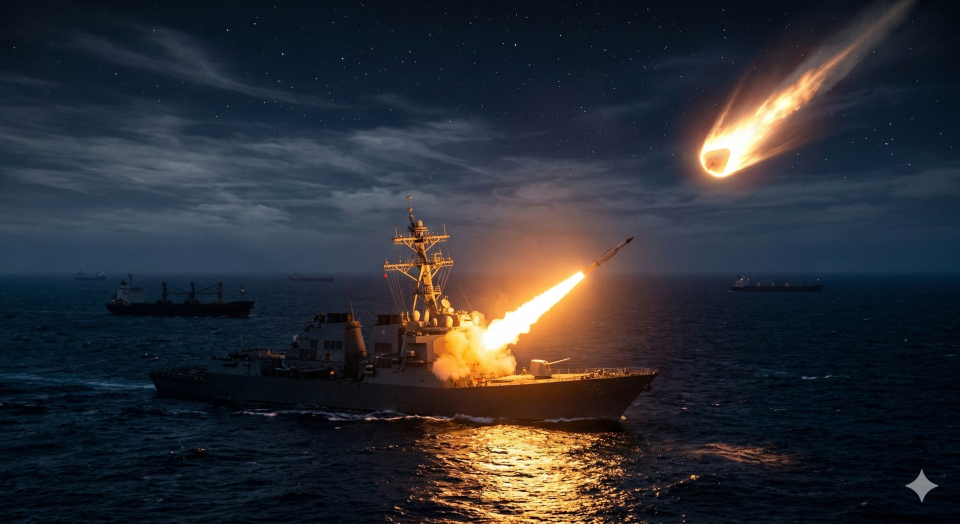
- Overview: The naval warfare paradigm shifted dramatically today as the USS Gerald R. Ford Carrier Strike Group successfully intercepted two hypersonic anti-ship ballistic missiles fired by regional militias targeting commercial convoys in the Gulf of Aden.
- Key Points:
- Hypersonic Combat Debut: Marks the first recorded combat use of hypersonic anti-ship weaponry by non-state (or state-backed proxy) actors, drastically elevating the threat level to global shipping.
- Aegis System Validated: The US Navy’s Aegis Combat System, utilizing SM-6 interceptors, proved capable of calculating and neutralizing the unpredictable glide trajectories of the hypersonic threats.
- Escalation Ladder: The use of such advanced weaponry suggests direct technology transfer from major adversarial states (likely Iran or China) to regional proxy forces.
- Insurance Premiums Skyrocket: Global maritime insurance companies have declared the entire Red Sea and Gulf of Aden as “war zones,” causing a massive spike in global freight costs.
Source Link: US Naval Institute News
- Q4. In naval terminology, the ‘Aegis Combat System’ is primarily famous for its capability in:
- A) Deep-sea mine sweeping.
- B) Integrated naval air and ballistic missile defense.
- C) Launching intercontinental nuclear ballistic missiles from submarines.
- D) Providing stealth capabilities to surface destroyers.
- Answer: B
