
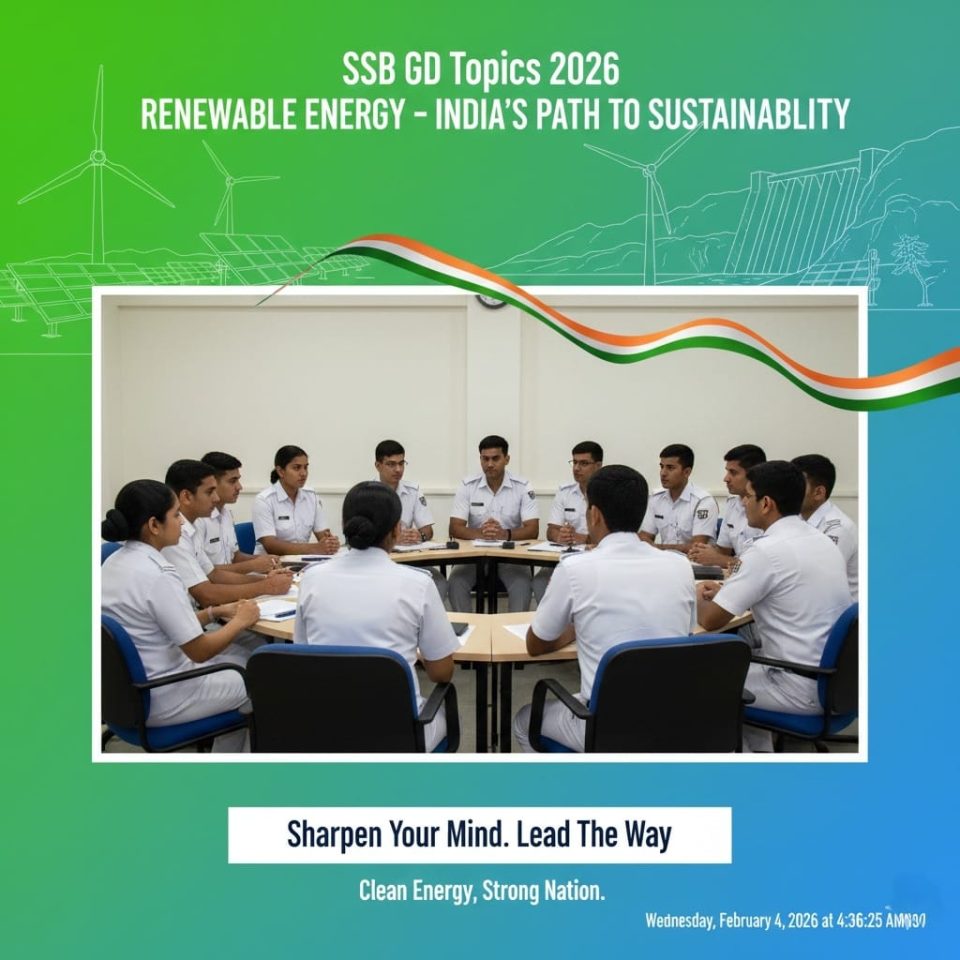
India’s growing energy demand makes renewable energy a national priority. Solar, wind, hydro, and bio‑energy are not just environmental solutions but also strategic assets for self‑reliance. This GD topic tests aspirants on awareness of sustainability, innovation, and national security.
Positive Side (Strengths of Renewable Energy in India)
- Energy Security: Reduces dependence on fossil fuel imports.
- Environmental Benefits: Cuts carbon emissions and pollution.
- Economic Growth: Creates jobs in manufacturing, installation, and maintenance.
- Global Leadership: India leads initiatives like the International Solar Alliance.
- Defense Readiness: Renewable energy strengthens bases and remote operations.
Negative Side (Challenges & Concerns)
- High Initial Costs: Infrastructure requires heavy investment.
- Storage Issues: Energy storage technology is still developing.
- Land Use: Large solar and wind farms need vast areas.
- Intermittency: Renewable sources depend on weather conditions.
- Policy Gaps: Implementation and regulation often lag behind targets.
Officer‑Like Perspective
- Renewable energy is not just about environment—it is about national strength and independence.
- Future officers must understand how energy security impacts defense, economy, and diplomacy.
- Balanced leadership means promoting innovation, discipline, and inclusivity in energy use.
Conclusion
Renewable energy is India’s path to sustainability and sovereignty. Aspirants should conclude GD with a solution‑oriented stance:
“Clean energy is strong energy. India must innovate, invest, and lead the world in renewables.”
Practice GD Questions for Aspirants
- Is renewable energy more important than traditional energy today?
- Can India achieve complete energy independence through renewables?
- How does renewable energy strengthen national security?
- Should India prioritize solar over other renewable sources?
- Is renewable energy affordable for rural India?
