
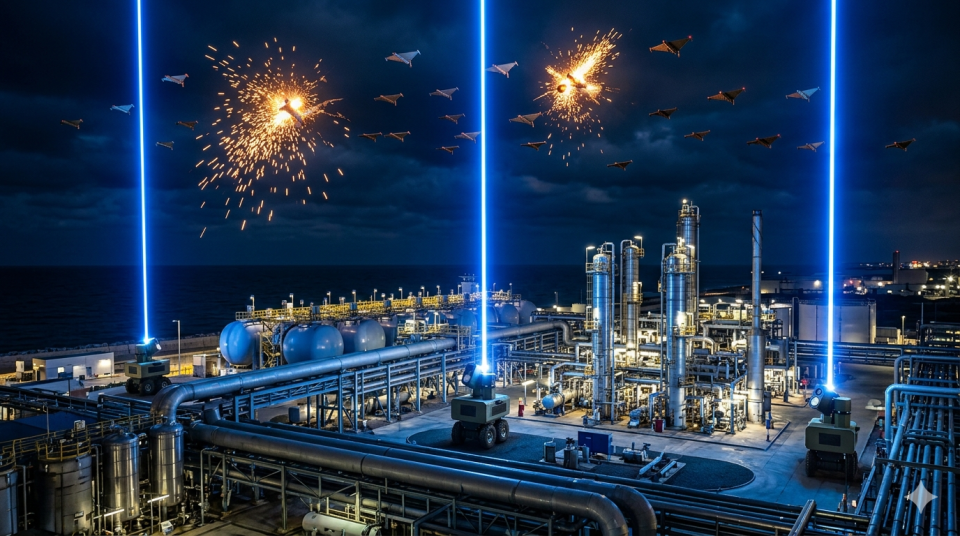
- Overview: The asymmetric war in the Middle East has targeted a devastating new vulnerability. Overnight, a massive swarm of proxy “kamikaze” drones attempted to destroy two of the largest saltwater desalination plants in the Persian Gulf.
- Key Points:
- Weaponizing Water: The Gulf nations rely entirely on high-tech desalination plants for their drinking water. By targeting these facilities, proxy militias are attempting to trigger an immediate, catastrophic civilian water crisis.
- Laser Defenses Activated: Regional defense forces successfully intercepted the swarm using newly installed Directed Energy Weapons (high-powered lasers), melting the drones mid-air before they could strike the water pipes.
- The Cost of Defense: This attack proves that critical civilian infrastructure is incredibly vulnerable to cheap, mass-produced drone warfare, forcing nations to spend billions on continuous air defense.
- A Dangerous Precedent: Targeting a nation’s fresh water supply violates the core tenets of international humanitarian law, pushing the regional conflict to its most extreme and dangerous edge yet.
- Q4. What is the primary function of a ‘Desalination Plant’, which forms the backbone of water security in the Middle East?
- To purify heavily polluted river water for agricultural use.
- To convert seawater into fresh, drinkable water by removing salt and other minerals.
- To extract crude oil from deep underwater reservoirs.
- To generate electricity using the kinetic power of ocean tides.
