
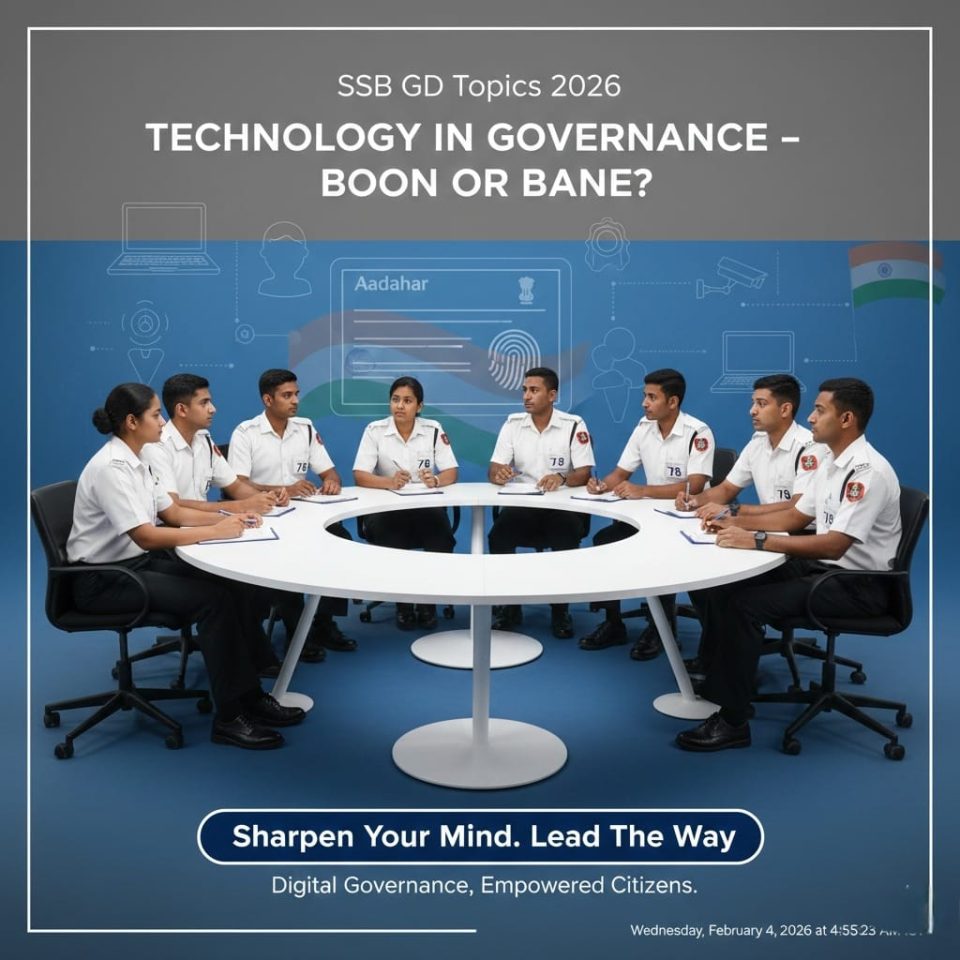
Technology has transformed governance in India through initiatives like Digital India, Aadhaar, and online service delivery. While it improves efficiency and transparency, concerns remain about privacy, accessibility, and misuse. This GD topic tests aspirants on awareness of governance, innovation, and accountability.
Positive Side (Strengths of Technology in Governance)
- Transparency: Digital records reduce corruption and middlemen.
- Efficiency: Online portals speed up services like tax filing, licenses, and subsidies.
- Accessibility: Citizens can access services remotely, reducing travel and delays.
- Data‑Driven Policy: Analytics help governments plan better.
- Defense & Security: Technology strengthens surveillance and border management.
Negative Side (Challenges & Concerns)
- Digital Divide: Rural and poor populations struggle with access.
- Privacy Risks: Data leaks and misuse of personal information.
- Overdependence: Excess reliance on technology may weaken human judgment.
- Cyber Threats: Vulnerability to hacking and cyber attacks.
- Implementation Issues: Poor infrastructure in remote areas.
Officer‑Like Perspective
- Technology in governance is not just about convenience—it is about discipline, accountability, and national security.
- Future officers must understand how digital systems strengthen governance but also require vigilance.
- Balanced leadership means promoting innovation with safeguards and inclusivity.
Conclusion
Technology in governance is a boon if used responsibly. Aspirants should conclude GD with a solution‑oriented stance:
“Digital power must serve citizens. India must balance innovation with accountability.”
Practice GD Questions for Aspirants
- Is technology making governance more transparent?
- Can Digital India bridge the rural‑urban divide?
- Should privacy be prioritized over efficiency?
- Is technology in governance more boon than bane?
- How can India secure its digital governance systems?
