
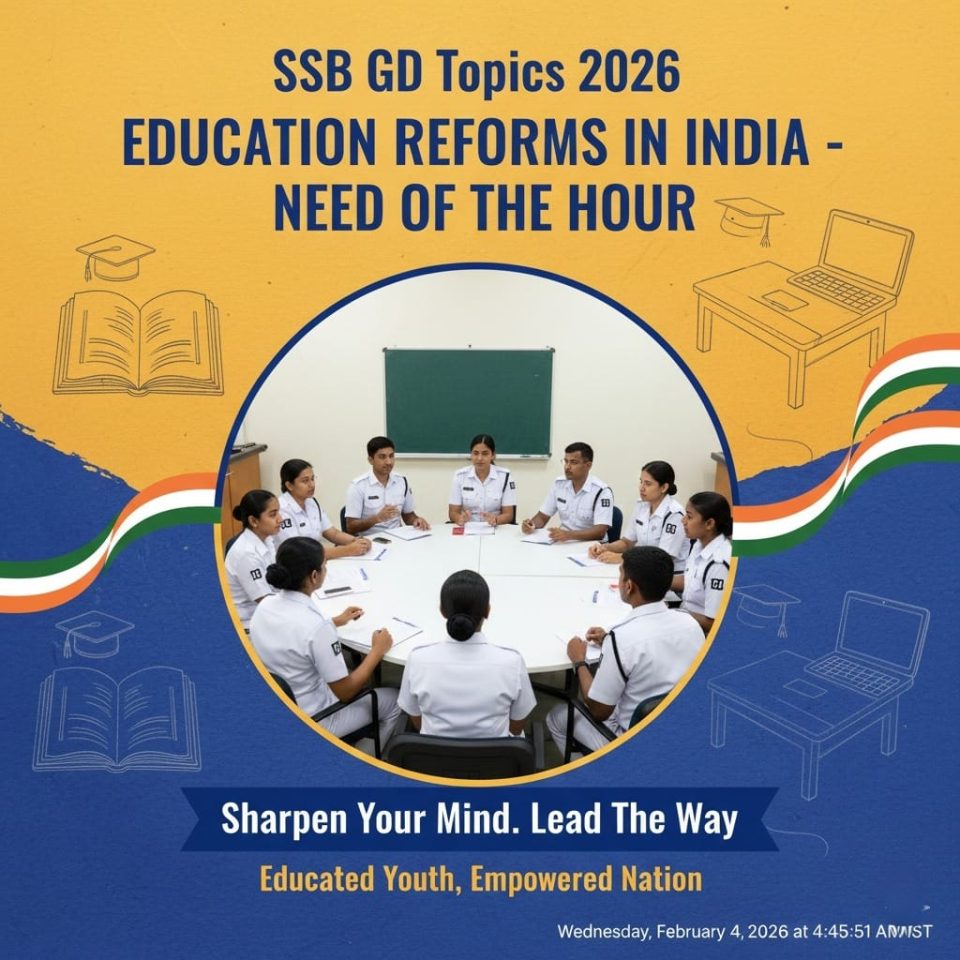
Education is the backbone of national progress. India’s system has produced world‑class talent, yet challenges like rote learning, outdated curriculum, and unequal access persist. Recent reforms such as the National Education Policy (NEP 2020) aim to modernize learning. This GD topic tests aspirants on awareness of governance, youth empowerment, and national development.
Positive Side (Strengths of Education Reforms)
- Holistic Learning: NEP emphasizes critical thinking, creativity, and practical skills.
- Flexibility: Choice‑based curriculum allows students to pursue interests.
- Skill Integration: Vocational training included in schools.
- Digital Push: Online platforms expand access to quality education.
- Global Competitiveness: Reforms align India with international standards.
Negative Side (Challenges & Concerns)
- Implementation Gaps: Policies often remain on paper.
- Infrastructure Deficit: Rural schools lack resources and trained teachers.
- Digital Divide: Poor connectivity excludes rural students.
- Resistance to Change: Traditional institutions slow to adopt reforms.
- Quality Concerns: Focus on quantity sometimes compromises standards.
Officer‑Like Perspective
- Education reforms are not just about academics—they are about nation building and leadership.
- Future officers must value discipline, innovation, and inclusivity in education.
- Balanced leadership means ensuring reforms reach every child, urban or rural.
Conclusion
Education reforms are essential for India’s progress. Aspirants should conclude GD with a solution‑oriented stance:
“Strong education builds strong citizens. India must reform to empower its youth.”
Practice GD Questions for Aspirants
- Is NEP 2020 a game changer for India?
- Should vocational training be compulsory in schools?
- How can India bridge the rural‑urban education gap?
- Is digital education more effective than traditional methods?
- Are reforms enough without teacher training?
