
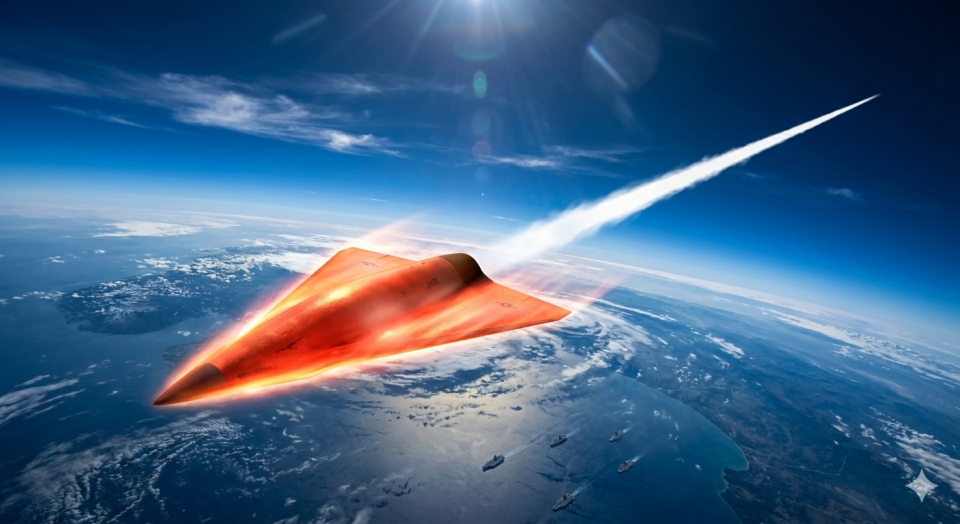
- Overview: India has conquered the hypersonic frontier. The Defense Research and Development Organisation (DRDO) executed a flawless test of its Hypersonic Technology Demonstrator Vehicle (HSTDV), sustaining flight at Mach 7 for a record duration.
- Key Points:
- The Scramjet Engine: The vehicle relies on a highly complex scramjet engine. It compresses the thin atmospheric air at supersonic speeds to sustain combustion, allowing the missile to fly incredibly fast without carrying heavy liquid oxygen tanks.
- Evading Defense Shields: A missile traveling at Mach 7 (seven times the speed of sound) maneuvers unpredictably. It leaves enemy anti-ballistic missile (ABM) systems zero time to react.
- Precision Targeting: The HSTDV successfully maintained its thermal integrity while striking its designated target with pinpoint accuracy.
- Future Aerospace Edge: This technology does not just build unstoppable missiles. It forms the foundation for low-cost satellite launch vehicles and future reusable spaceplanes.
- Q2. In aerospace engineering, how does a ‘Scramjet’ engine fundamentally differ from a traditional ‘Ramjet’ engine?
- A scramjet works only in the vacuum of space, while a ramjet works in the atmosphere.
- A scramjet slows down incoming air to subsonic speeds before combustion, while a ramjet does not.
- A scramjet maintains supersonic airflow entirely through the combustion chamber, allowing for much higher speeds (Mach 5+).
- A scramjet relies entirely on battery power for propulsion.
