
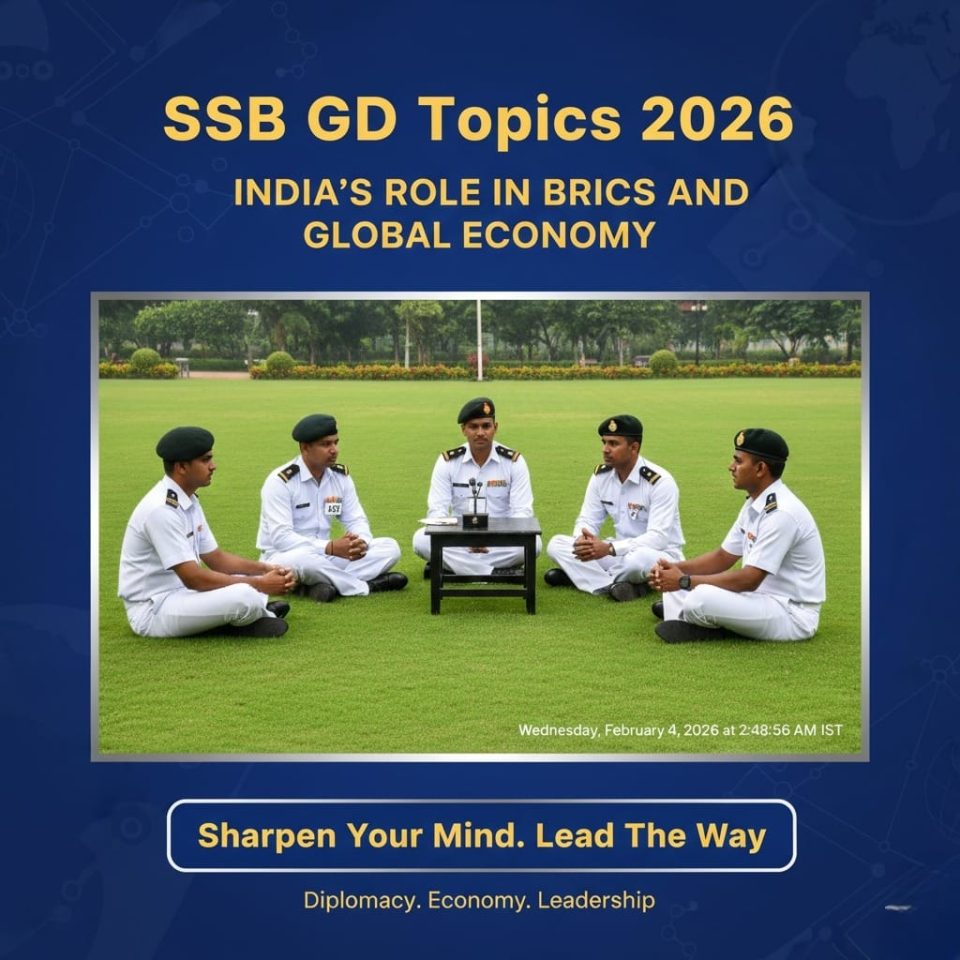
BRICS (Brazil, Russia, India, China, South Africa) has emerged as a powerful economic and political bloc. India’s participation in BRICS highlights its growing influence in shaping global trade, finance, and diplomacy. This GD topic tests aspirants on awareness of international relations, economic strategy, and India’s leadership role.
Positive Side (India’s Strengths in BRICS)
- Economic Growth: India is one of the fastest‑growing economies, contributing significantly to BRICS GDP.
- Technology & Innovation: India’s IT sector and digital initiatives strengthen BRICS cooperation.
- Global Voice: BRICS gives India a platform to challenge Western dominance in global institutions.
- Financial Cooperation: Initiatives like the New Development Bank support infrastructure and development projects.
- Strategic Balance: India uses BRICS to balance relations with China and Russia while maintaining ties with the West.
Negative Side (Challenges & Concerns)
- China Factor: Tensions with China affect India’s influence within BRICS.
- Limited Impact: Critics argue BRICS has not achieved major reforms in global institutions like IMF or WTO.
- Economic Disparities: Differences in growth rates and priorities among members create friction.
- Geopolitical Conflicts: Russia’s global controversies and China’s assertiveness complicate BRICS unity.
- Domestic Priorities: India must balance global commitments with internal development needs.
Officer‑Like Perspective
- BRICS is not just about economics—it is a strategic platform for India to assert global leadership.
- Future officers must understand how international cooperation strengthens national security and economic resilience.
- Balanced leadership means leveraging BRICS for growth while safeguarding India’s sovereignty and interests.
Conclusion
India’s role in BRICS reflects its ambition to be a global leader. While challenges exist, BRICS offers India opportunities to shape the future of the global economy. Aspirants should conclude GD with a forward‑looking stance:
“India’s participation in BRICS is not just about economics—it is about shaping a fair, multipolar world order.”
Practice GD Questions for Aspirants
- Has BRICS achieved its goals of reforming global institutions?
- How does India balance its relations with China within BRICS?
- Is BRICS more symbolic than effective in global politics?
- Should India prioritize BRICS or Western alliances for economic growth?
- Can BRICS become a true alternative to G7 in the future?
